Book project: Didaktik and Assessment
Conceptual Reconfigurations, Governance Transformations, and Pedagogical Practices (From A Nordic Point of View)
Call for Book Chapters. Deadline for first abstracts: 3rd of May, 2026.
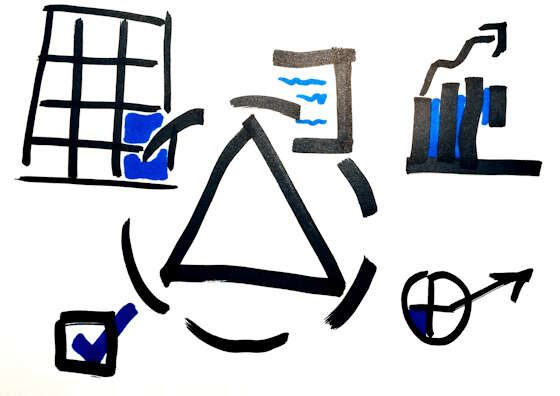
Didaktik and Assessment: Cycles of Planning, Monitoring, Feedback, Improving and Progress (illustration: Tobias Werler).
About
This project explores how Didaktik and assessment interact in contemporary education governance, curriculum reforms, and classroom practices.
Assessment has become a powerful structuring force in contemporary education systems, shaping governance, curriculum reforms, and professional accountability. At the same time, the Nordic and continental tradition of Didaktik has historically emphasized Bildung, content justification, and teachers’ professional interpretive judgement.
This project develops an edited international volume that investigates the evolving relationship between Didaktik and assessment. Bringing together theoretical and empirical contributions, it explores whether current developments marginalize Didaktik, reconfigure it, or open possibilities for new conceptual integrations between assessment, curriculum, governance, and pedagogical practice.
- Read more about the background for the book-project and the techical guidelines for submitting a contribution (pdf)
- Read an essay about the project: Assessment as a claim on didaktik (pdf)
- Download the call for chapters (pdf)

Background
In recent decades, international benchmarking, outcome-based curricula, and accountability systems have transformed assessment into a central mechanism of educational governance. While these developments strongly influence schooling, assessment has rarely been theorized within the Didaktik tradition, creating a need to examine their evolving relationship.
Aims
The project aims to develop a scholarly volume that critically examines the relationship between Didaktik and assessment across governance, curriculum, and classroom practice. It seeks to foster dialogue between assessment research, curriculum theory, and Didaktik scholarship while encouraging new theoretical and empirical perspectives.
Contact
- Tobias Werler (editor)
- Eline Wiese (editor)