

This Circle U. project "Toppling the totem pole: How to identify and overcome hierarchies preventing interdisciplinary research work", funded in 2023, is coordinated by Professor Florence Degavre, UCLouvain, and Professor Luca Tateo, University of Oslo.
The other participants are:
Dr. Amaury Peeters, Louvain Cooperation/UCLouvain, Dr. Maísa Edwards and Dr. Ingrid Schlindwein, King’s College London Phd, and student Zahra Abbasi, University of Oslo.
– Science is a collective enterprise based on the freedom of pursuing curiosity and passion for knowledge by many minds. Interdisciplinary work is becoming more and more important in academia, research freedom is a important topic today. It's therefore natural for us to explore and discuss the hierarchies in academia, Tateo explains.
The topic of the project is:
- Is this always true in academia, or hierarchies and division between disciplines are an obstacle?
- How can we make a better interdisciplinary collaboration discussing the differences of power within the university?
They made an international survey: The respondents were 140 university researchers in different countries working with interdisciplinary research.
– We asked them how they experience hierarchies in their academic life, how hierarchies look like and what problems they encounter, Tateo says.
Hierarchies in the academic life
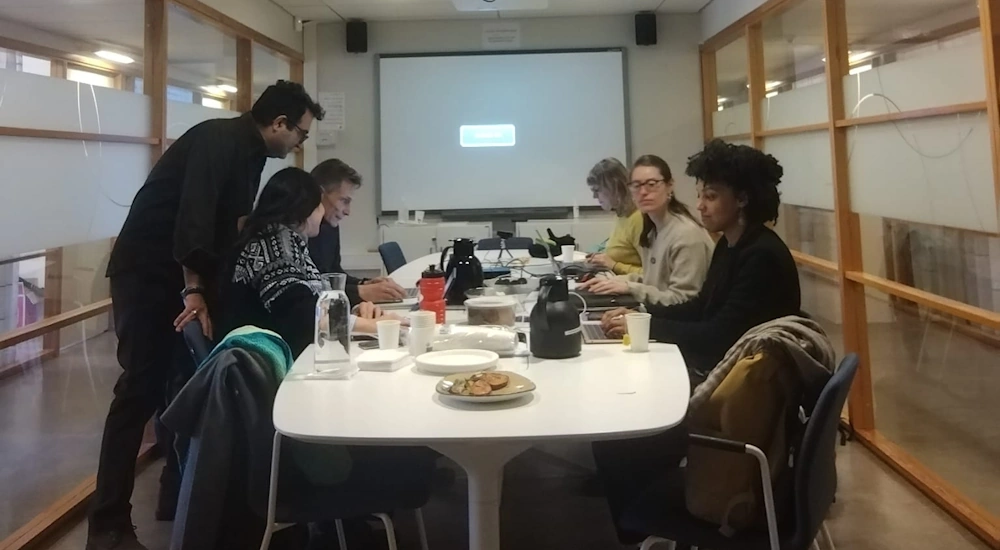
At the Department of Special Needs Education, the research group held a workshop to analyse the results of the survey.
The first results show that:
- Hierarchies in academia manifest across roles, disciplines, and geographical contexts, reinforcing inequalities in knowledge production, recognition, and career progression.
- Hierarchies are a normal phenomenon in organizations, but they can affect scholars lives and wellbeing in problematic ways.
- Hierarchies appears between disciplines, because hard sciences are more valued, but also about age and gender.
– I really think that those results emphasizes the importance of having an open discussion about hierarchies in university, Tateo claims.