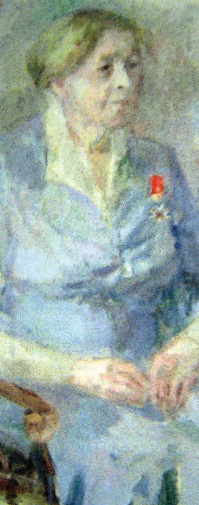
Tradisjonen gir fakultetet en god anledning til å invitere personer som gjennom sin forskning og formidling har bidratt til å løfte fram viktige problemstillinger på feltet utdanningsvitenskap.
Forelesningen tjener som en inspirasjonskilde både for studenter og ansatte, og den bidrar til å knytte internasjonale kontakter som fakultetet også senere kan ha glede av.
Helga Eng-forelesningen holdes normalt i september, og ansvaret for forelesningen går på omgang mellom fakultetets institutter. I tilknytning til æresdoktorkreeringen ved Universitetet i Oslo, vil fakultetets kandidat holde Helga Eng-forelesningen.
Helga Eng-forelesningen ble etablert som et årlig arrangement i 1997, i kjølvannet av opprettelsen av det utdanningsvitenskapelige fakultet.
Tidligere Helga Eng-forelesninger
2025: Professor Christian Ydesen - Governing Futures through Education: Historical Lessons for Times of Global Polycrisis
Christian Ydesen is Chair of History of Education and Education Policy Analysis at the Department of Education, University of Zürich, Switzerland, and an Honorary Research Fellow at the Department of Education, University of Oxford, United Kingdom.
About the talk
It's 150 years since Helga Eng was born. The talk explores how education has been mobilised in times of systemic crisis to sustain legitimacy, build international coalitions, and narrate possible futures. By drawing on historical turning points since the mid-20th century, the presentation highlights how education has served as both a governance tool and an imaginative resource in navigating global polycrises. It will also consider lessons learnt and key points of attention for the contemporary situation and for the futures of global governance beyond 2030.
2024: Æresdoktor Professor Eric Dearing ‒ Developmental obstacles and opportunities for children growing up poor in wealthy societies
Professor Eric Dearing was appointed honorary doctor by the University of Oslo in 2024, and on that occasion he gave the public lecture: "Developmental obstacles and opportunities for children growing up poor in wealthy societies".
Abstract
Social scientists have long recognized that children in poor households experience a range of challenges, often struggling with learning in school and facing exceptional risk for mental health problems. For children growing up poor in wealthy societies, however, it has been a matter of controversy as to whether these struggles are, in fact, due to low family income. Some social scientists (and policy makers) have argued that low household income is the outcome (not cause) of dysfunction within poor households, and this dysfunction is the true culprit for children growing up poor, not money. Professor Dearing's research has led him to be skeptical of these arguments.
In this lecture, Professor Dearing will present evidence from two decades of work in Norway and the United States illustrating the powerful ways in which money matters for children growing up poor in wealthy societies. This evidence provides a window into how poverty creates obstacles to children’s growth as well as a window into policy and intervention that offer opportunities for children to thrive.
2023: Professor Arjen Wals ‒ Maintaining hope on a dying planet: The pivotal role of education
Arjen Wals is Professor of Transformative Learning for Socio-Ecological Sustainability, Wageningen University. He is also UNESCO Chair of Social Learning and Sustainable Development.
Abstract
Education and learning in the context of sustainability requires a certain freedom to explore alternative paths of development and new ways of thinking, valuing and doing. Such education and learning is not easy in a world with systemic and historical conditions that all seem to be working in the opposite direction and that are highly resilient.
The question of what needs "disrupting" is as important as the question of what needs "sustaining."
Professor Arjen Wals introduced transgressive learning, resistance pedagogy and disruptive capacity building as essential components of sustainability education.
He then proposed and illustrated that a systemic whole school approach, combined with the creation of so-called ecologies of learning, can lead to educational responses. This may in turn entice young people to critically assess what is happening to our planet, and to explore alternative pathways.
2022: Æresdoktor Pamela Grossman ‒ The dream of a common language: Identifying core practices for teaching
The lecture was given in connection to University of Pennsylvania-professor Pamela Grossman's Doctor Honoris Causa award from the University of Oslo in 2020. Celebrations were delayed until 2022 due to the Covid-19 outbreak.
Abstract
One definition of a profession posits that professionals share a common technical language to describe their work.
Teaching is often said to lack such common language, making it difficult both for novices to learn to practice and for experienced professionals to talk in depth about their joint work.
Responding to this critique, a number of people have tried to build a foundation for the identification of core or high leverage practices for teaching, around which to organize professional education.
Professor Pamela Grossman are among these people. Her talk explored both the promise and challenges of identifying and teaching core practices.
2019: Professor Patricia Alexander ‒ Redefining Literacy for All in the 21st Century: The Nexus of Text, Critical Thinking, and Technology.
Department of Human Development and Quantitative Methodology, College of Education, University of Maryland, USA
Abstract
Students populating classrooms today confront literacy challenges that were virtually unheard of less than a generation ago. For one, all those belonging to this iGeneration have only known a world that is digitally networked and continually awash in information that can be irrelevant, inaccurate, or intentionally misleading.
Without guidance from parents, teachers, and researchers, these students can become enslaved by their “smart” devices, rather than the master of the potential those devices can afford for literacy learning and development. In this presentation, Dr. Alexander will delve deeper into the literacy practices of iGeneration students including their reading, writing, and oral communication behaviors, their confounding of information with knowledge, and their tendency to deal with even controversial or provocative content quite superficially rather than critically and analytically.
She will conclude by discussing important changes in contemporary habits of mind and habits of behavior for teachers, parents, and for their students that should promote optimal literacy learning and development for all.
2018: Pamela Grossman ‒ A Language for Teaching, A Framework for Improvement.
Pamela Grossman (born 1953) was at the time of the speech the Dean of the Graduate School of Education and the George and Diane Weiss Professor of Education at the University of Pennsylvania, and emerita professor, Academic Council, Graduate School of Education, Stanford University.
Abstract
More than forty years ago, Dan Lortie famously lamented the lack of a common language with which to describe teaching. In her talk, Dr. Grossman explored the use of observation protocols as a tool to develop common language and professional vision around teaching and to improve instruction.
2017: Æresdoktor Professor Jan-Eric Gustafsson ‒ Schooling and Cognitive Abilities
The Honorary doctor lecture was held by Jan-Eric Gustaffsson ‒ Professor at Göteborgs Universitet, Institutionen för pedagogik och specialpedagogik.
Abstract
A considerable amount of research has demonstrated cognitive abilities, and particularly so general intelligence, to be the strong determinants of individual differences in outcomes of schooling. However, it is also conceivable that cognitive abilities are influenced by schooling, even though much less research has been devoted to investigations of this issue. The main aim of the lecture is to review research on the question if, and to what extent, schooling influences the development of cognitive abilities.
In the first part of the lecture the definition, measurement and structure of cognitive abilities is discussed. It is concluded that general cognitive ability almost completely coincides with inductive reasoning ability, or fluid intelligence (Gf). Evidence is also presented that Gf is a causal factor in acquisition of knowledge and skills, such as vocabulary and reading skills.
While Gf in many theoretical formulations has been assumed to be fixed and immutable, the second part of the lecture presents evidence from different lines of research concerning environmental impact on Gf. One line of research concerns long-term changes in the population level of Gf, or the so called Flynn effect. According to this effect there have been massive increases in the level of Gf since the 1930s, and one main hypothesis is that this is due to increases in the quantity and quality of education. In a second line of research effects of direct training of Gf tasks have been investigated, with mixed results. A third line of research has used quasi-experimental and observational methods to study effects of schooling on Gf, and relatively strong effects have been demonstrated. It is concluded that Gf develops as a function of schooling, and theoretical and practical implications of this conclusion are discussed.
2016: Professor Marianna Papastephanou ‒ Democracy, Education and Patriotism of a Kind: but what kind?
Professor Marianna Papastephanou,University of Cyprus, Department of Education.
Abstract
The well-deserved, broad endorsement of democratic citizenship as an educational aim effected a quick popularization and dissemination of this aim within educational sciences. A side-effect is that educating for democracy often becomes a modish slogan that secures for the user the self-image of the progressive educator. This obscures deeper theoretical challenges, dilemmas and difficulties. Democratic citizenship requires identifications with a collectivity (nation-state) whose viability depends on the citizen’s patriotic allegiance. Since patriotism is ambiguous, perhaps pernicious, is democratic education appropriate to multicultural, postmodern schools? The lecture explores possibilities of reformulating patriotism as an ideal compatible with democratic and cosmopolitan education.
2015: Professor Ian Menter ‒ What is a teacher in the 21st century and what does a 21st century teacher need to know?
Vice-President, British Educational Research Association, formerly Professor of Teacher Education, University of Oxford.
Abstract
There is now almost universal recognition around the world that 'teaching matters' and that the quality of teaching is crucial in social and economic development.
However, there has been remarkably little change in the ways in which teachers' work is constructed and the ways in which teachers are educated for a lifetime of preparing young people for their future worlds.
In this talk Ian Menter reflected on debates about the nature of teaching and teacher education to challenge much of the dominant thinking, suggesting that such thinking is often driven by ideology and prejudice rather than by careful deliberation or by the use of research evidence.
His conclusion is that there are important underlying values that can be traced through the history of teaching which may now be more important than ever, but that the ways in which these values are embodied in the work of contemporary teachers are in need of major reconsideration.
2014: Æresdoktor Professor Charles Hulme ‒ Is neuroscience a useful guide to developing educational interventions?
Æresdoktor 2014 Professor Charles Hulme, University College London.
Abstract
In recent years excitement has been generated by advances in brain imaging which promise to give an increased understanding of the relationship between brain mechanisms and human thought and behaviour. Neuroimaging, in turn, has fuelled the development of a new field of Educational Neuroscience which seeks to use insights from neuroscience to guide educational practice.
However, extrapolating from brain mechanisms to educational practice is likely to be “a bridge too far“ (Bruer, 1997). In contrast I will argue that that we need to identify cognitive level explanations for how children learn key educational skills (such as reading and arithmetic). Such cognitive explanations, in turn, have direct implications for designing effective methods of teaching and theoretically are vital for gaining a better understanding of the causes of children’s learning difficulties.
2013: Professor Stefan Thomas Hopmann ‒ The End of Schooling as We Know It? The Rise and Fall of Public Schooling.
Professor Stefan Thomas Hopmann, Wien universitet.
Abstract
Historically seen, the success of public mass schooling is of recent origin. It came about as part of the emergence since late 18th century of the nation-state. About a century later it swept through most of the Western World, before conquering the globe in the course of 20th century. Measured by its own goals, it was a sweeping success. Public schooling has never before played such a huge role in shaping biographies as well as societies.
However, in recent years, different social, political and economical developments have emerged which all have called the future of public mass schooling into question. The educational (research) community has been an ambitious and ambiguous part of this process. Many of these developments are made apparent by the massive impact of internationalized accountability policies. Even though different cultures react differently to the mounting pressure on public schooling, now is the time to ask, if the current dismantling of the nation-state will be accompanied by the demise of its most successful spin-off: public schooling, as we know it.
2012: The professors Lynn and Douglas Fuchs ‒ Understanding the cognitive underpinnings of at-risk learners' response to intervention.
Lynn and Douglas Fuchs are international leaders in the study of learning disabilities. They share the Nicholas Hobbs Chair in Special Education and Human Development at Vanderbilt University, Peabody College and are the directors of Vanderbilt Kennedy Center Reading Clinic.
Lynn and Douglas Fuchs have been instrumental in developing responsiveness-to-intervention, or RTI, a multi-tiered approach toward better identifying students with learning disabilities.
Professor Lynn Fuchs has conducted programmatic research on assessment methods for enhancing instructional planning and on instructional methods for improving reading and math outcomes for students with learning disabilities. She has published more than 200 empirical studies in peer-review journals and has been identified by Thompson ISI as one of 250 "most highly cited" researchers in the social sciences.
Fuchs has has received a variety of awards to acknowledge her research accomplishments that have enhanced reading and math outcomes for children with and without disabilities.
Professor Douglas Fuchs' research focuses on the development of pre-referral interventions, peer-assisted learning strategies in reading and math, curriculum-based measurement procedures, and methods of reintegrating students with high-incidence disabilities into mainstream settings. He is the author or co-author of more than 200 articles in peer-review journals, and has won best paper awards for several of these publications.
He was recently identified by Thompson ISI as one of 250 most highly cited researchers in the social sciences.
2011: Professor Andrew Pollard ‒ Unlocking Learning? Towards Evidence-informed Policy and Practice in Education
Professor Andrew Pollard, Institute of Education, London.
Abstract
In complex, open democracies there is a constant need for evidence to inform public discussion and decision-making by practitioners, managers, civil servants and politicians associated with education services.
UK Strategic Forum for research in Education extended an OECD CERI service of providing external "Country Reviews" of educational research and development. It did this by structuring and facilitating processes of internal self-assessment and knowledge exchange within and between each of the four countries which make up the UK.
This Helga Eng lecture will review this experience and report on the development of a model representing six elements in the development and mobilisation of knowledge in national systems of education.
- Origination and planning - including the conditions and provision for the facilitation and prioritisation of research activity.
- Creation and production - focusing on both the initiation and carrying out of projects in respect of each major type of research
- Assessment and validation - including peer judgement, user and beneficiary validation and the process, criteria and indicators specific to each assessment context and type of research.
- Collection and interpretation - concerning issues such as the processing of new knowledge in libraries and databases, empirical review and theoretical synthesis.
- Mediation and brokerage - addressing the multifaceted promotional and communication strategies which enable the supply of and demand for evidence to be bridged.
- Use and impact - considering the ways in which knowledge is used, scaled up and takes effect within policy and practice.
2010: Professor Sverker Sörlin ‒ Kunskapspolitik med mänskligt ansikte – är det möjligt?
Professor Sverker Sörlin, Kungliga Tekniska Högskolan (KTH) i Stockholm
Abstract
Vi lever i ett kunskapssamhälle, sägs det. I alla fall är det vad samhällets ledande företrädare säger sig önska. Det är svårt att vara emot kunskap. Vi som gillar upplysning och individens frigörelse måste också gilla kunskap. Kunskapssamhället har en kunskapsekonomi och där lyckas de med kunskap bättre. Samtidigt är kunskap ojämnt fördelad, trots att vi länge haft obligatorisk skola. Ojämlikheten är social och global. Hur ojämn kan den vara och samhället ändå vara ett kunskapssamhälle? Och vilken kunskap räknas i kunskapssamhället? All kunskap är inte användbar i kunskapsekonomin, men betyder det att den inte är värdefull? Vad skall vi göra med begrepp som visdom, insikt, reflexion, empati eller rentav tro? Hur förhåller sig kunskap till olika former av social handling? Är kunskap riktningslös eller är kunskap mer värd om den är kopplad till en idé om vart samhället bör gå och varför? Är kunskap abstrakt och immateriell eller är den i själva verket kopplad till tingen och världens tröghet? Vad betyder det i så fall att ha kunskap? Och hur skulle en kunskapspolitik se ut som tar hänsyn till kunskapens materialitet?
Forelesninger 1997-2009
2009: Professor Donald Broady, Utbildningsvetenskapeliga fakulteten, Uppsala universitet ‒ Utbildningsvetenskapens egenart (Avholdt januar 2010.)
2008: Professor Cathrine Elizabeth Snow, Harvard Graduate School of Education, Harvard University ‒ Researcher-Practitioner Collaborations - Under what conditions do they actually improve educational practice?
2006: Professor Gudmund Hernes ‒ Læringskoalisjonen: Hva den er og hvordan vi skal få den til å fungere.
2005: Professor Ph.D. Yrjö Engeström, Universitetet i Helsinki ‒ Studying learning and development as expansive phenomena.
2004: Professor, dr. phil. Kirsten Drotner, Syd-dansk universitet. ‒ Medier og dannelse - pedagogiske utfordringer for et komplekst samfunn
2003: Professor dr.phil. Per Schultz Jørgensen ‒ Kompetansebegrepet - vitenskap, praksis eller politikk?
2002: Professor John Macbeath, University of Cambridge ‒ Leading in a time of change.
2001: Professor Wolfgang Klafki,Key ‒ Problems of the Modern World - Central Dimensions of Curriculum for International Education.
2000: Professor Linda Darling-Hammond, National Center for Restructuring Education, Schools and Teaching. Teachers College Columbia University ‒ Teaching and Learning for the 21st Century.
1999: Professor Carol Weiss, Harvard University ‒ Studying the Linkage between Evaluation and Educational Policy.
1998: Professor Edgar W. Jenkins, School of Education, University of Leeds ‒ Who Owns Teachers' Work?
1997: Professor James Wertsch, Department of Education, Washington University in St. Louis ‒ Language and Identities: Unresolved Issues and Challenges for the future.