Read a blog post from the project: “It is the same, but not quite”
The aim of the teaching resource is to give recently arrived students opportunities to reflect on language. It consists of a language game and a language memory activity. For students who have lived in Norway for less than a year, the language game may feel demanding, even with multilingual support. The game works best in linguistically diverse groups, where students can draw on and share different experiences and languages. The language memory activity is suitable for everyone.
Teacher’s Guide
Teacher’s Guide (PDF)
Materials for Printing
Game board
Cards
Language Memory Task (PDF)
Printing Settings
Please select the following settings:
- Scaling: Fit to paper size
- Double-sided printing: Print on both sides – flip on the short edge
Tip: Cut the cards with the text side facing up, as there may be a difference of approximately 1 mm between the front and back sides.
Feedback from a school
Participating in Talk About Language! has been a positive experience for both teachers and students. In the group activity, where students played the game, they were free to talk about language using whichever languages they preferred. In the language memory task, students also chose different language strategies. We found that they took the activities seriously.
“As teachers, we experienced the activities as authentic and highly engaging for students.”
One teacher said that “the students dared to be more exploratory and creative,” while another emphasized the importance of “giving students the opportunity to use their full linguistic repertoire.” For the students, it did not feel like ordinary classroom instruction. One student said, “It was like talking with friends!”, while another commented, “I learned both about language and about my friends.”
Several students described the activities as playful:
“I could use several languages without being afraid of saying something wrong.”
“This became an exploratory and playful learning activity. We have learned how valuable it is to let students explore language freely—an experience we will carry forward!”
(Teachers and students at Cissi Klein Upper Secondary School, Trondheim, Norway.)
Development of the Teaching Unit and Copyright
Talk About Language! was developed through a collaboration between students, multilingual teachers, educational designers, and researchers. The project began with workshops on language and translation and subsequently led to the development of a language board game and a language memory activity.
Students contributed ideas for cards and tasks, and the game was piloted in nine classrooms across Norway. Feedback from the pilot phase resulted in revisions to both the game and the teacher guide. Multilingual research assistants transcribed and translated audio recordings from the pilot implementation, strengthening the quality and relevance of the content.
© 2025 Joke Dewilde and the Faculty of Educational Sciences, University of Oslo
This game was developed with support from the Faculty of Educational Sciences at the University of Oslo and is protected by copyright. The game may be used freely for educational purposes and non-commercial research, provided that the original authorship and source are acknowledged.
Important Information for Those Who Wish to Use or Translate the Game
The game was originally developed for young people with a short length of residence in Norway and was subsequently translated into English.
The language has been carefully adapted to the target group, with a focus on simplicity and accessibility.
Translations into other languages or dialects should therefore follow similar principles:
- The language level should remain simple and inclusive without oversimplifying the educational content. The tasks should continue to challenge and engage learners.
- Local language varieties and cultural references should be taken into account. Standard varieties may be used where they provide the broadest possible accessibility, ideally combined with expressions that students perceive as familiar and meaningful.
- Audio resources (e.g., read-aloud versions) should also be considered and adapted according to the same principles as the written text, ensuring that spoken language matches the target group's language practices and comprehension.
- The game’s core intention of promoting language awareness should be preserved. Inaccurate or poorly adapted translations may weaken its educational function. We therefore encourage anyone wishing to adapt the game to contact us in advance so that we can provide advice and quality assurance. We also welcome feedback on how translations function in practice, enabling us to continue developing the game collaboratively across different contexts.
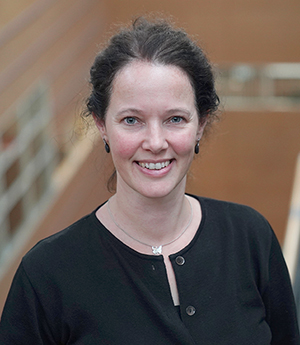
For questions regarding use, adaptation, translation, or collaboration, please contact the project leader, Joke Dewilde, University of Oslo.
For questions regarding use, adaptation, or collaboration, please contact the project leader, Joke Dewilde, at the University of Oslo