
About the project
Digital platforms have penetrated deeply our everyday life, affecting people’s informal interactions, ways of living and understanding the world, and the institutional structures that underpin these.
Digital platforms can be described as ‘online content hosting intermediaries’ (Williamson 2017a, 62) with designs that allow interaction between a ‘platform core’, programs and user-generated content through application programming interfaces (Hillman et al 2020).
Increasingly, these digital platforms provide an infrastructure for learning, social connections, gaming, commerce and engagement with news, and their impact on homes and families was amplified by the COVID-19 pandemic.
Whereas digital platforms are tools, ‘platformisation’ describes processes.
Platformisation can be defined as ‘the penetration of infrastructures, economic processes, and governmental frameworks of platforms in different economic sectors and spheres of life’ (Poell, Nieborg and Van Dijck 2019, 5–6). Platformisation emphasizes how platforms are not just ‘objects’ but the result of socio-technical and political-economic processes of development and implementation; they are technically integrated into the fabric of societal sectors, transforming their economic dynamics. (Kerssens & van Dijck 2021)
Despite growing research interest in the fundamental social, institutional and individual consequences of platformisation, we know less about how families are transforming with the everyday use of today’s heavily commercialised and globally networked platforms and their algorithms.
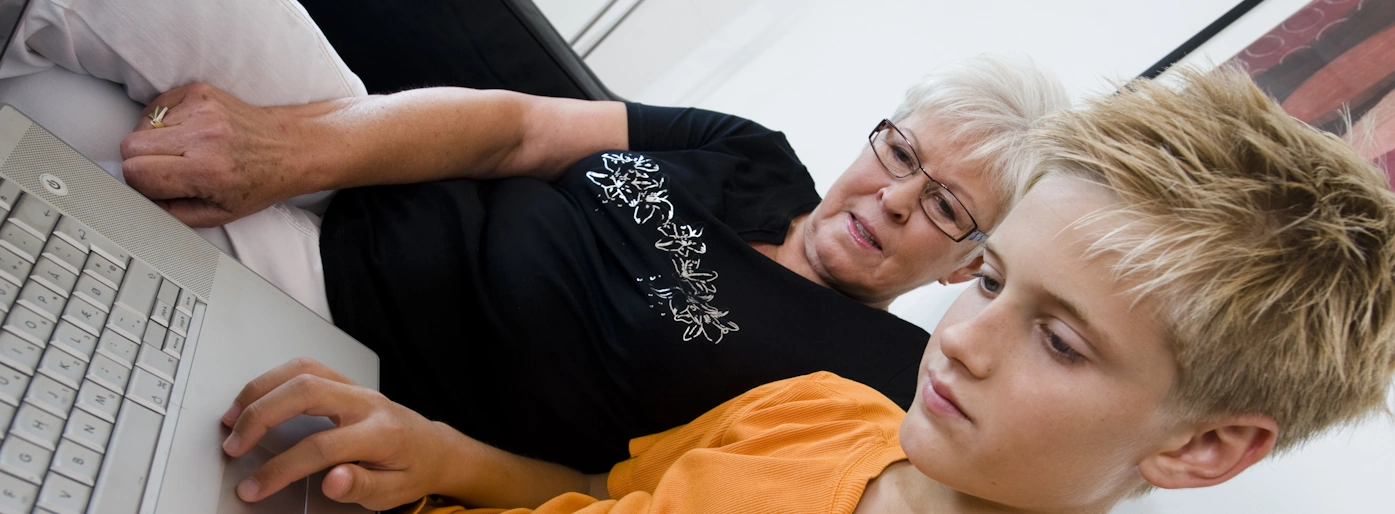
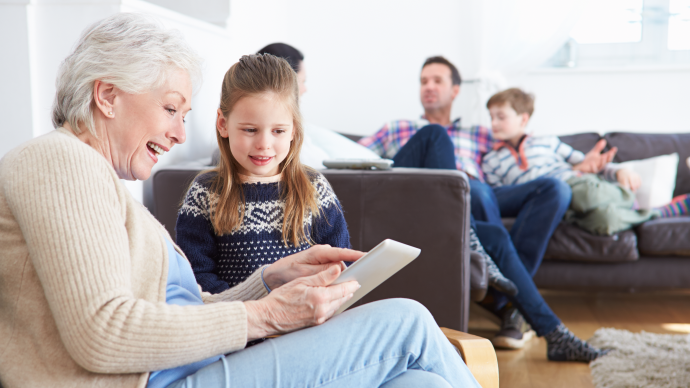
The PlatFAMs project focused distinctively on intergenerational experiences in relation to the platformisation of family life.
The core of the project is the study of up to hundred three-generation families in five European countries (Norway, Estonia, UK, Romania and Spain) over a two-year period, across different spaces online and offline, using a breadth of qualitative and participatory methods. In addition, we did secondary analysis of longitudinal quantitative data across European countries.
Three thematic strands was studied across families and generations:
- Digital navigation and domestication; understood as the ways people interact with different platforms in order to identify inter-generational differences and similarities within diverse family structures.
- Digital negotiation and co-construction; understood as relational aspects within diverse family structures regarding connections and networking using digital platforms.
- Digital future-making as the process of anticipating and creating imaginaries of digital futures, both personal and societal, that shape present practices in ways that are consequential for families.
Objectives
The ambition was to unpack the relational and temporal aspects of digital platforms’ wide-ranging social transformation of everyday family practices and inter-generational relations in contemporary societies.
The primary objective was to reveal and critically understand the conditions of family relationships with pervasive, all-encompassing digital platforms, and generate recommendations for diverse stakeholders regarding families’ engagement with platforms.
Secondary objectives were to unpack relational and temporal aspects of digital platforms’ wide-ranging social transformation (of everyday family practices and intergenerational relations in contemporary European societies). This was expressed in three sub-objectives:
- to trace the impact of digital platforms through the life course as expressed in family practices;
- to better understand the negotiations between family members and across generations about the use and implications of digital platforms;
- to understand the meaning making of how different age groups within diverse families create and co-construct imaginaries of digital futures.
Work packages
- WP 0: Project management and coordination
- WP 1: Navigation and Domestication
- WP 2: Negotiation and co-construction of meaning
- WP 3: Future-making and home as site for learning
- WP 4: Integration and Theory Development
- WP 5: Dissemination and knowledge exchange