English version of this page

Haris Themistocleous

Professor
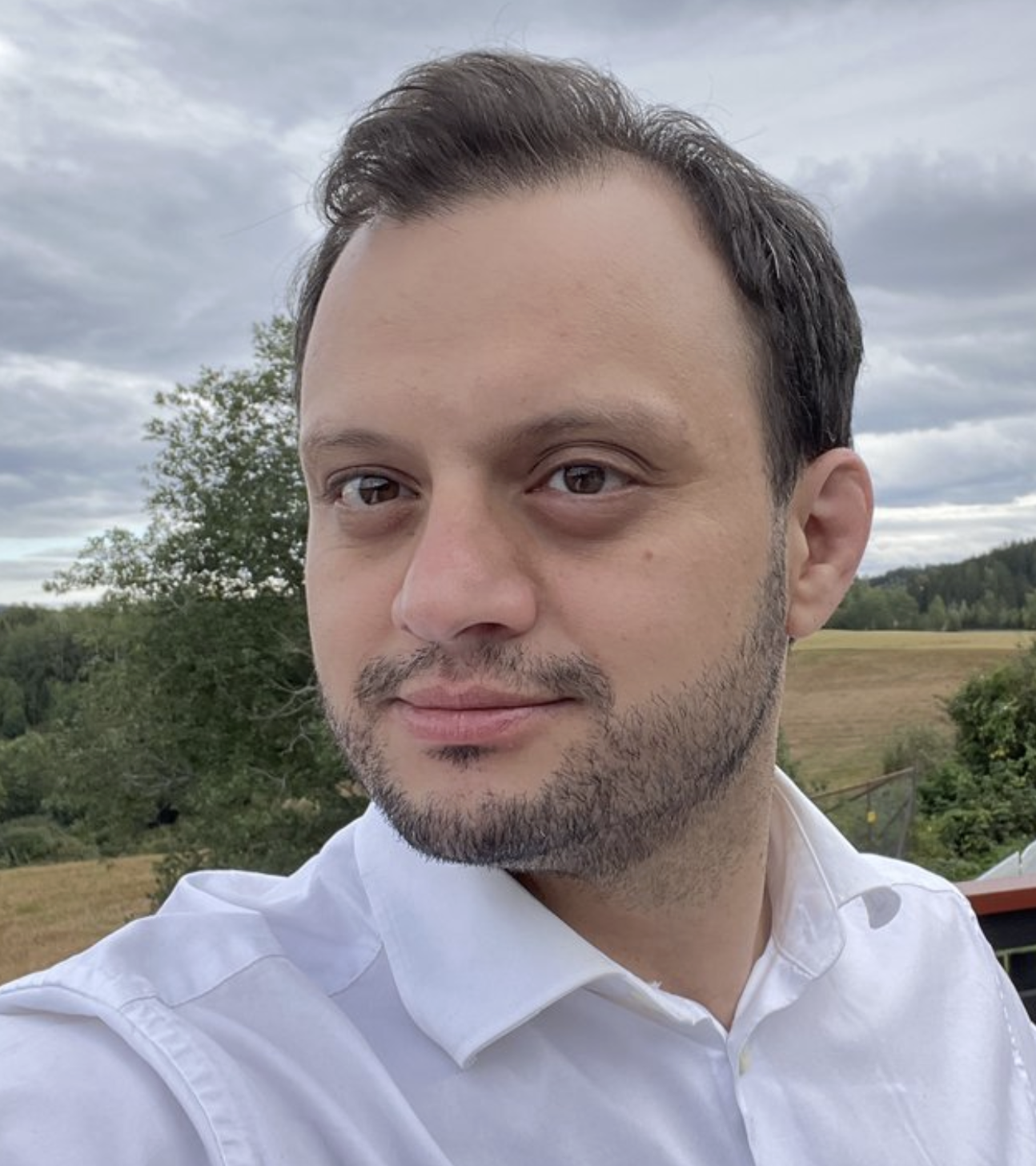
Bilde av Haris Themistocleous
Telefon +47 22 85 81 36
Rom 482
Brukernavn
Besøksadresse Sem Sælands vei 7 Helga engs hus 0371 Oslo
Postadresse Postboks 1140 Blindern 0318 Oslo

Jeg er en beregningsorientert nevrolingvist som undersøker hvordan tale-, språk- og kommunikasjonsmønstre kan utnyttes for å forstå, overvåke og støtte individer med nevrodegenerative tilstander. Forskningen min fokuserer på å utvikle maskinlæringsmodeller for automatisk deteksjon, differensialdiagnose og longitudinell sporing av primær progressiv afasi (PPA), Alzheimers sykdom og mild kognitiv svikt ved hjelp av multimodale data – inkludert talespråk, strukturell og funksjonell MR, og nevrofysiologiske vurderinger. Jeg har utviklet Open Brain AI (https://openbrainai.com/), en beregningsplattform for å automatisere tale- og språkanalyse for klinisk og pedagogisk forskning.

Arbeidet mitt spenner over tre sammenkoblede domener: (1) beregningsorientert modellering av språk- og talebiomarkører i nevrodegenerasjon, (2) grensesnittet mellom språklig struktur (spesielt informasjonsstruktur og prosodi) og kognitiv nedgang, og (3) sosiolingvistisk og individuell variasjon i tale som indikatorer på nevrologisk helse. Jeg er også interessert i transdiagnostiske tilnærminger til tidlig deteksjon og digital fenotyping av kognitive og kommunikative lidelser. Forskningen min integrerer metoder fra beregningsorientert lingvistikk, kognitiv nevrovitenskap og klinisk nevrologi, med sterk vekt på praktisk anvendelighet og etisk AI. Jeg samarbeider internasjonalt med forskningssentre i USA, Sverige, og Hellas.

Etter å ha nytt godt av støttende akademisk veiledning, er jeg forpliktet til å fremme inkluderende forskningsmiljøer og støtter aktivt forskere i tidlig karriere – spesielt de fra underrepresenterte bakgrunner – innen beregningsorientert og klinisk nevrovitenskap. Jeg ønsker muligheter for samarbeid, dialog og engasjement med klinikere, teknologer og beslutningstakere som jobber i skjæringspunktet mellom språk, kognisjon og hjernehelse velkommen. Ta gjerne kontakt.

Google Scholar,  Github  ResearchGate, Personlig nettside

Yrkeserfaring

  • Associate Professor of Speech, University of Oslo
  • Postdoctoral Fellow in Computational Neurolinguistics, Johns Hopkins University
  • Postdoctoral Fellow in Computational Linguistics, University of Gothenburg
  • Visiting research scholar, Princeton University

Undervisning
 

Høsten 2025

  • RSNE4340 - Anvendt kvalitativ eller kvantitativ forskning
  • SPED4101 - Innføring i Audiopedagogikk
  • SPED1100 - Introduksjon til spesialpedagogikk
  • RSNE4013 - Grunnleggende begreper i statistikk
  • SPED3011 - Lærevansker i et individ- og systemperspektiv: Audiopedagogikk - hørsel, språk og kommunikasjon
  • UV9010 - Forskningsetikk


Emneord: Speech, Language, Communication, Cognition, Aphasia, NLP, Statistics, Machine learning

Publikasjoner

Artikler i tidsskrifter

  1. Themistocleous, C., & Stark B. (2026). Language biomarker screening using AI: a transdiagnostic approach to the brain. Scientific Reports, 16, 4207. https://doi.org/10.1038/s41598-025-34257-z
  2. Andreou, M., Themistocleous, C., & Peristeri, E. (2026). Integrating artificial intelligence and natural language processing to investigate lexical errors in autistic preschoolers. Research in Autism, 130, 202771. https://doi.org/https://doi.org/10.1016/j.reia.2025.202771
  3. Tippett, D. C., Surrao, K., Neophytou, K., Kim, H., Gallegos, J., Themistocleous, C., Rapp, B., Hillis, A. E., & Tsapkini, K. (2025). Written picture descriptions distinguish variants of primary progressive aphasia. Journal of Alzheimer’s Disease, https://doi.org/10.1177/13872877251376381
  4. Themistocleous Charalambos (2025). Linguistic and Emotional Prosody: A Systematic Review and ALE Meta-Analysis. Neuroscience & Biobehavioral Reviews, 106210. https://doi.org/https://doi.org/10.1016/j.neubiorev.2025.106210.
  5. Themistocleous Charalambos (2024). Open Brain AI and language assessment. Frontiers in Human Neuroscience, 18. https://doi.org/10.3389/fnhum.2024.1421435
  6. Kim, Hana., Hillis, Argye E., & Themistocleous Charalambos (2024). Machine Learning Classification of Patients with Amnestic Mild Cognitive Impairment and Non-Amnestic Mild Cognitive Impairment from Written Picture Description Tasks. Brain Sciences, 14(7).https://mdpi-res.com/d_attachment/brainsci/brainsci-14-00652/article_deploy/brainsci-14-00652.pdf?version=1719476290
  7. Themistocleous Charalambos, Andreou Maria, Peristeri Eleni (2024). Autism detection in children: Integrating Machine Learning and Natural Language Processing in Narrative Analysis. Behavioral Sciences, 14(6), 459-475; https://doi.org/10.3390/bs14060459
  8. Stark, Brielle C., Bryant, Lucy, Themistocleous Charalambos, den Ouden, Dirk - Bart, & Roberts, Angela C. (2023). Best practice guidelines for reporting spoken discourse in aphasia and neurogenic communication disorders. Aphasiology, 1 - 24. https://doi.org/10.1080/02687038.2022.2039372
  9. Themistocleous, Charalambos, Fyndanis, Valantis, & Tsapkini, Kyrana. (2022). Sonorant spectra and coarticulation distinguish speakers with different dialects. Speech Communication.https://doi.org/10.1016/j.specom.2022.06.002.
  10. Afthinos Afthinos, Themistocleous Charalambos,Herrmann Olivia, Fan Hongli, Lu Hanzhang, Tsapkini, Kyrana (2022). The Contribution of Working Memory Areas to Verbal Learning and Recall in Primary Progressive Aphasia. Frontiers in Neurology, 13. https://doi.org/10.3389/fneur.2022.698200.
  11. Stark Brielle C., Bryant Lucy, Themistocleous Charalambos, den Ouden Dirk-Bart, Roberts Angela C. (2022). Best practice guidelines for reporting spoken discourse in aphasia and neurogenic communication disorders. Aphasiology, 1-24. https://doi.org/10.1080/02687038.2022.2039372.
  12. Themistocleous Charalambos, Webster Kimberly, Tsapkini, Kyrana (2021). Effects of tDCS on Sound Duration in Patients with Apraxia of Speech in Primary Progressive Aphasia. Themistocleous Charalambos, Webster Kimberly, Tsapkini, Kyrana (2021). Effects of tDCS on Sound Duration in Patients with Apraxia of Speech in Primary Progressive Aphasia. Brain Sciences, 11(3). https://doi.org/10.3390/brainsci11030335.
  13. Themistocleous Charalambos, Bronte Ficek, Kimberly Webster, Dirk-Bart den Ouden, Argye E. Hillis, Kyrana Tsapkini (2021). Automatic subtyping of individuals with Primary Progressive Aphasia. Journal of Alzheimer’s Disease. https://doi.org/10.3233/JAD-201101.
  14. Themistocleous Charalambos, Kyriaci Neophytou, Brenda Rapp, Tsapkini Kyrana (2020). Au- tomatic metrics of spelling errors on words and non-words. Journal of Speech, Language, and Hearing Research. https://doi.org/10.1044/2020_JSLHR-20-00177.
  15. Themistocleous Charalambos, Webster Kimberly, Alexandros Afthinos, and Tsapkini Kyrana (2020). Morphological markers in speech production distinguish individuals with different primary progressive aphasia variants: A natural language processing and machine learning approach. American Journal of Speech-Language Pathology. https://pubs.asha.org/doi/10.1044/2020_AJSLP-19-00114.
  16. Themistocleous, Charalambos, Eckerström Marie, Kokkinakis Dimitrios (2020). Voice quality and speech fluency distinguish individuals with Mild Cognitive Impairment from Healthy Controls. PLOS ONE 5(7): e0236009. https://doi.org/10.1371/journal.pone.0236009.
  17. Stark Brielle C., Dutta Manaswita, Murray Laura, Bryant Lucy, Fromm Davida; MacWhinney Brian, Ramage Amy, Simmons-Mackie Nina, Roberts Angela, Fergadiotis Gerasimos, den Ouden Dirk, Brock Kris, McKinney-Bock Katy, Jin Paek Eun, Harmon Tyson, Themistocleous Charalambos, Yoo Hyunsoo, On Yoon Si, Sharma Saryu, Aveni Katharine, Gutierrez Stephanie, Doppelbauer Lea, Dawn Bunker Lisa (2020). Standardizing assessment of spoken discourse in aphasia: A working group with deliverables. American Journal of Speech-Language Pathology. 1–12.
  18. Georgiou George and Themistocleous Charalambos (2020). Vowel learning in diglossic settings: Evidence from Arabic-Greek learners. International Journal of Bilingualism. https://doi.org/10.1177/1367006920945396.
  19. Themistocleous Charalambos (2019). Dialect classification from a single sonorant sound using Deep Neural Networks. Frontiers in Communication. https://doi.org/10.3389/fcomm.2019.00064.
  20. Fyndanis Valantis and Themistocleous Charalambos (2019). Are there prototypical associations between time frames and aspectual values? Evidence from Greek aphasia and healthy ageing, Clinical Linguistics and Phonetics.
  21. Themistocleous Charalambos, Eckerström Marie, and Dimitrios Kokkinakis (2018). Identification of Mild Cognitive Impairment from Speech in Swedish using Deep Sequential Neural Networks. Frontiers in Neurology 9, 975. URL: https://www.frontiersin.org/article/10.3389/fneur.2018.00975.
  22. Themistocleous, Charalambos (2017). Effects of two linguistically proximal varieties on the spectral and coarticulatory properties of fricatives: Evidence from Athenian Greek and Cypriot Greek. Frontiers in Psychology.
  23. Themistocleous, Charalambos (2017). Dialect classification using vowel acoustic parameters. Speech Communication 94, 13 – 22.
  24. Grohmann Kleanthes, Papadopoulou Elena and Themistocleous Charalambos (2017). Acquiring Clitic Placement in Bilectal Settings: Interactions between Social Factors. Frontiers in Communication 2:5.
  25. Themistocleous, Charalambos (2017). The Nature of Phonetic Gradience across a Dialect Continuum: Evidence from Modern Greek Vowels. Phonetica 74, 157–172.
  26. Themistocleous, Charalambos (2016). Seeking an anchorage: Evidence from the tonal alignment of the Cypriot Greek prenuclear pitch accent. Language and Speech, 59(4):433–461.
  27. Themistocleous, Charalambos (2016). The bursts of stops can convey dialectal information. Journal of the Acoustical Society of America EL 140(4), EL334–EL340.
  28. Themistocleous, Charalambos (2014). Edge-Tone Effects and Prosodic Domain Effects on Final Lengthening. Linguistic Variation 14(1). 129–160. 

Bøker

  1. Themistocleous Charalambos (2015). Experimental Design and Statistics in Linguistics. Using R (In Greek). Athens: Ion. ISBN:978-960-508-187-4.
  2. Fragaki Georgia, Georgakopoulos Athanasios, Themistocleous Charalambos (Eds.) (2012). Current Trends in Greek Linguistics. Newcastle upon Tyne: Cambridge Scholars Publishing.
  • Sundström, Simon & Themistokleous, Charalampos (2026). A whole-word computational algorithm for phonological error scoring: Differentiating children with developmental language disorder, hearing impairment, and typical development. Clinical Linguistics & Phonetics. ISSN 0269-9206. s. 1–16. doi: 10.1080/02699206.2026.2704602. Fulltekst i vitenarkiv
  • Andreou, Maria; Themistokleous, Charalampos & Peristeri, Eleni (2025). Integrating artificial intelligence and natural language processing to investigate lexical errors in autistic preschoolers. Research in Autism Spectrum Disorders. ISSN 1750-9467. 130. doi: 10.1016/j.reia.2025.202771. Fulltekst i vitenarkiv
  • Themistokleous, Charalampos (2025). Linguistic and emotional prosody: A systematic review and ALE meta-analysis. Neuroscience and Biobehavioral Reviews. ISSN 0149-7634. 175. doi: 10.1016/j.neubiorev.2025.106210. Fulltekst i vitenarkiv
  • Kim, Hana; Hillis, Argye E. & Themistokleous, Charalampos (2024). Machine Learning Classification of Patients with Amnestic Mild Cognitive Impairment and Non-Amnestic Mild Cognitive Impairment from Written Picture Description Tasks. Brain Sciences. 14(7). doi: 10.3390/brainsci14070652. Fulltekst i vitenarkiv
  • Themistokleous, Charalampos (2024). Open Brain AI and language assessment. Frontiers in Human Neuroscience. 18. doi: 10.3389/fnhum.2024.1421435. Fulltekst i vitenarkiv
  • Themistokleous, Charalampos; Andreou, Maria & Peristeri, Eleni (2024). Autism Detection in Children: Integrating Machine Learning and Natural Language Processing in Narrative Analysis. Behavioral Sciences. 14(6). doi: 10.3390/bs14060459. Fulltekst i vitenarkiv

Se alle arbeider i NVA

Publisert 4. okt. 2022 09:06 - Sist endret 19. sep. 2026 21:40